Coffee guide

Coffee specialities explained

From ristretto to Einspänner: what goes into each drink, where it comes from – and what it costs in the cafés of the RatePresso community?

Straight & black

No milk: this is where you taste the bean and the barista most clearly.

Espresso

Origin: Italy

3.6 ★89 reviewsavg. 2.40 €84 cafés

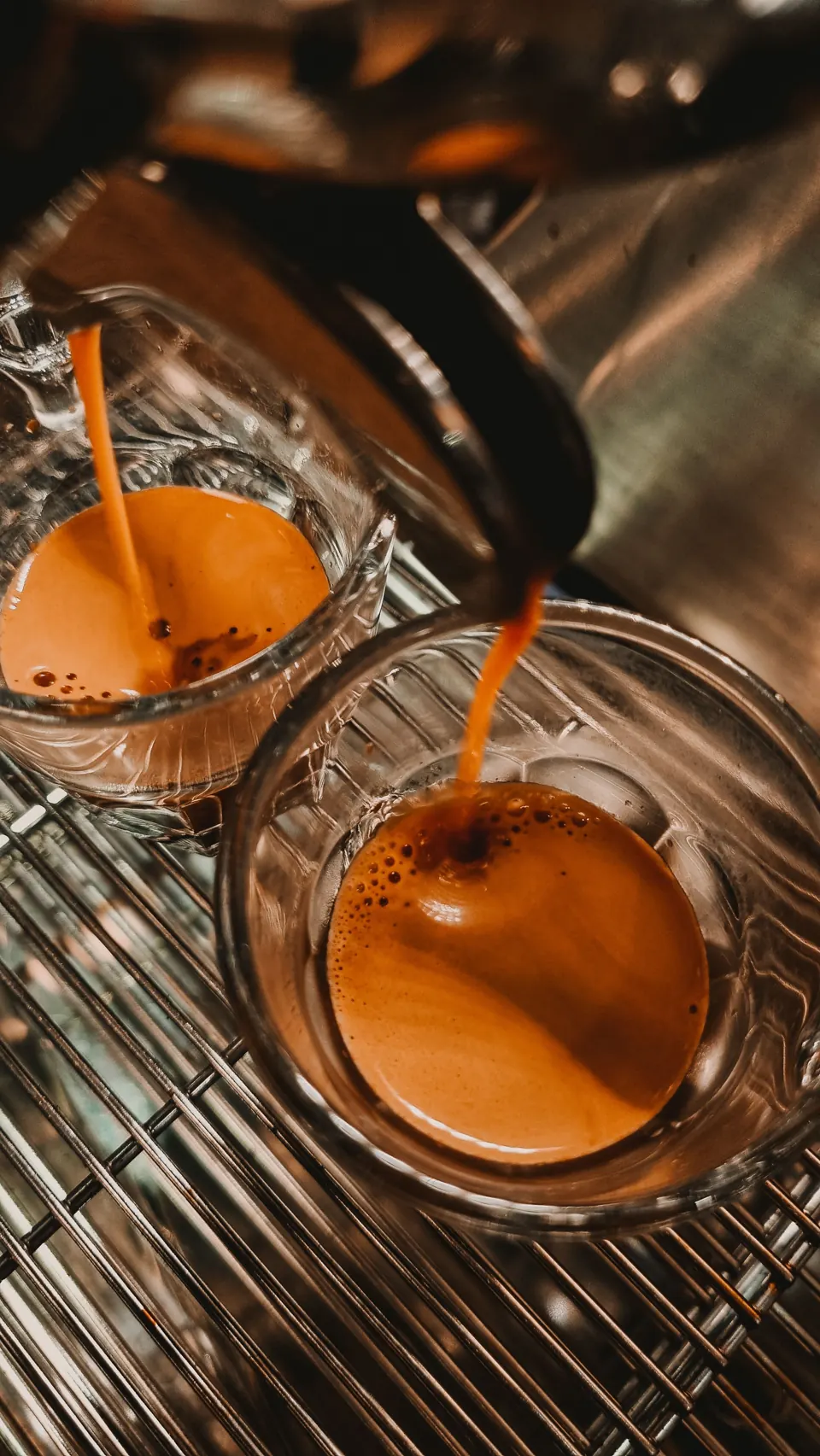
The base of almost every speciality: hot water is forced through finely ground, tamped coffee at about 9 bar in roughly 25–30 seconds. On top sits the crema – a hazel-brown foam of coffee oils and CO₂.

Coffee
approx. 7–9 g
In the cup
approx. 25–30 ml
Cup
pre-warmed espresso cup
Cafés serving Espresso on the map →

Doppelter Espresso

Origin: Italy (“doppio”)

3.7 ★3 reviewsavg. 3.80 €3 cafés

Twice the coffee, twice the volume – pulled through a double basket. Many cafés pull doubles by default and use them as the base for milk drinks.

Coffee
approx. 14–18 g
In the cup
approx. 50–60 ml
Cafés serving Doppelter Espresso on the map →

Ristretto

Origin: Italy

The “restricted” espresso: same dose, roughly half the water. Denser, sweeter and less bitter – one concentrated sip.

In the cup
approx. 15–20 ml
Shot
much shorter than espresso

Lungo

Origin: Italy

The “long” espresso: more water runs through the same puck. A bigger, milder cup with more bitterness – not the same as an Americano.

In the cup
approx. 50–70 ml
Shot
longer than espresso

Americano

Origin: Italy / USA

3.0 ★1 review1 café

Espresso topped up with hot water. Close to filter coffee in strength, but with the bold character of espresso. The name is said to come from US soldiers in Italy during World War II.

Base
espresso or doppio
Plus
hot water
Cup
approx. 150–250 ml
Cafés serving Americano on the map →

Filterkaffee

Origin: Germany (Melitta, 1908)

3.3 ★3 reviewsavg. 3.43 €3 cafés

Hot water (about 92–96 °C) flows without pressure through medium-ground coffee and a paper filter. The result is clean, light and often fruity – ideal for light-roast speciality beans. Poured by hand it is called “pour over”.

Ratio
approx. 60 g coffee per litre
Grind
medium
Brew time
approx. 3–4 minutes
Cafés serving Filterkaffee on the map →

Aerocano

Origin: Australia

4.0 ★1 reviewavg. 3.90 €1 café

An Americano frothed with the steam wand – no milk at all. This creates a creamy, airy head and a rounder, softer cup.

Base
espresso + hot water
Method
aerated with steam
Milk
none
Cafés serving Aerocano on the map →

With milk

From a dot of foam to a tall glass: the ratio of espresso, milk and foam makes the difference.

Espresso Macchiato

Origin: Italy

3.8 ★12 reviewsavg. 3.02 €10 cafés

“Macchiato” means “stained”: an espresso marked with a spoonful of milk foam. As bold as espresso, just a little rounder.

Base
espresso
Plus
1–2 spoons of milk foam
Cup
espresso cup
Cafés serving Espresso Macchiato on the map →

Cortado

Origin: Spain

3.9 ★7 reviewsavg. 2.56 €7 cafés

Espresso “cut” with about the same amount of warm milk and hardly any foam. Small, balanced and the go-to at Spanish bars.

Ratio
approx. 1 : 1 espresso to milk
Foam
very little
Glass
approx. 100–120 ml
Cafés serving Cortado on the map →

Cappuccino

Origin: Italy

3.7 ★77 reviewsavg. 3.75 €70 cafés

The classic: espresso with hot milk and a creamy cap of foam, roughly a third each. Named after the colour of the Capuchin friars’ habits. In Italy it is traditionally a morning drink.

Base
espresso
Milk & foam
roughly equal parts
Cup
approx. 150–180 ml
Cafés serving Cappuccino on the map →

Flat White

Origin: Australia / New Zealand

4.5 ★10 reviewsavg. 4.40 €10 cafés

More coffee, less foam: a double espresso (often ristretto) with velvety microfoam and only a very thin layer on top. Stronger than a cappuccino and the canvas for latte art.

Base
doppio or double ristretto
Milk
silky microfoam, flat
Cup
approx. 160–180 ml
Cafés serving Flat White on the map →

Latte Macchiato

Origin: Italy

4.2 ★8 reviewsavg. 3.85 €8 cafés

Here the milk gets “stained”: hot milk and foam go into a tall glass first, then the espresso is poured in slowly – creating the signature three layers.

Base
plenty of hot milk
Plus
espresso poured last
Glass
approx. 250–300 ml
Cafés serving Latte Macchiato on the map →

Caffè Latte

Origin: Italy

4.5 ★2 reviewsavg. 5.20 €2 cafés

Espresso with lots of steamed milk and a thin layer of foam, usually in a big cup. Milder than a cappuccino – careful: order just a “latte” in Italy and you get a glass of milk.

Base
espresso
Milk
lots, little foam
Cup
approx. 250–350 ml
Cafés serving Caffè Latte on the map →

Café au Lait / Milchkaffee

Origin: France

3.5 ★6 reviewsavg. 3.97 €6 cafés

Strong filter coffee with hot milk at about 1 : 1 – traditionally drunk from a bowl at breakfast. Known in Germany as Milchkaffee, often made with espresso instead.

Base
filter coffee or espresso
Milk
about the same amount, hot
Vessel
large cup or bowl
Cafés serving Café au Lait on the map →

Vietnamesischer Kaffee

Origin: Vietnam

5.0 ★1 reviewavg. 4.20 €1 café

Strong, usually dark-roasted Robusta drips slowly through a small metal filter (“phin”) onto sweetened condensed milk. Hot or over ice (“cà phê sữa đá”) – sweet, intense and chocolatey.

Base
Robusta from a phin filter
Plus
sweetened condensed milk
Served
hot or over ice
Cafés serving Vietnamesischer Kaffee on the map →

Sweet, chocolate & spice

With chocolate, syrup or spices – sometimes almost a dessert.

Mocaccino / Caffè Mocha

Origin: Italy / USA

4.0 ★5 reviewsavg. 4.82 €5 cafés

Espresso meets chocolate: cocoa or chocolate sauce, espresso and steamed milk, often finished with cocoa powder or cream. Also known as caffè mocha.

Base
espresso + chocolate
Plus
milk and foam
Cup
approx. 200–300 ml
Cafés serving Mocaccino on the map →

Marocchino

Origin: Italy (Piedmont)

3.0 ★1 reviewavg. 3.00 €1 café

A small glass with cocoa or chocolate, espresso and milk foam, dusted with more cocoa. Small, intense and chocolatey – named after a brown Moroccan leather.

Base
espresso
Plus
cocoa and milk foam
Glass
small, approx. 100 ml
Cafés serving Marocchino on the map →

Dirty Chai

Origin: USA

4.0 ★1 reviewavg. 6.10 €1 café

A chai latte – black tea with spices such as cinnamon, cardamom and ginger plus steamed milk – made “dirty” with a shot of espresso.

Base
chai latte
Plus
1 shot of espresso
Cafés serving Dirty Chai on the map →

Espressino

Origin: Italy

5.0 ★1 reviewavg. 2.90 €1 café

The little sister of the mocaccino: espresso with cocoa or chocolate spread and a little milk foam, often in a small glass dusted with cocoa. Especially popular in southern Italy.

Base
espresso
Plus
cocoa + a little foam
Glass
small, approx. 100 ml
Cafés serving Espressino on the map →

Caramel Latte

Origin: USA

5.0 ★1 reviewavg. 4.50 €1 café

A caffè latte with caramel syrup, often finished with a drizzle of caramel sauce. Sweet, mild and a coffee-chain classic.

Base
espresso + lots of milk
Plus
caramel syrup
Cup
approx. 300 ml
Cafés serving Caramel Latte on the map →

Pumpkin Spice Latte

Origin: USA (2003)

4.0 ★2 reviewsavg. 6.50 €2 cafés

The autumn classic: a latte with pumpkin spice syrup (cinnamon, nutmeg, ginger, clove), usually topped with cream. Made famous by Starbucks and back on many menus every September.

Base
espresso + milk
Plus
pumpkin spice syrup, cream
Season
autumn
Cafés serving Pumpkin Spice Latte on the map →

Cold & dessert

For summer days – or simply as dessert.

Affogato

Origin: Italy

4.4 ★5 reviewsavg. 4.92 €5 cafés

“Drowned”: a scoop of vanilla ice cream with a hot espresso poured over it. Half drink, half dessert – eat it straight away.

Base
1 scoop of vanilla ice cream
Plus
1 hot espresso
Cafés serving Affogato on the map →

Eiskaffee

Origin: Germany / Austria

4.5 ★6 reviewsavg. 6.07 €6 cafés

The ice-cream-parlour version: chilled coffee with vanilla ice cream and whipped cream, often with chocolate shavings. Not the same as iced coffee over ice cubes.

Base
chilled coffee
Plus
vanilla ice cream + cream
Glass
tall glass with a straw
Cafés serving Eiskaffee on the map →

Cold Brew

Origin: Japan / USA

3.0 ★1 reviewavg. 4.20 €1 café

Cold instead of hot: coarsely ground coffee steeps in cold water for 12–24 hours. Smooth, chocolatey and low in acidity – over ice, black or with milk.

Steep time
12–24 hours, cold
Grind
coarse
Served
over ice
Cafés serving Cold Brew on the map →

Espresso Tonic

Origin: Sweden

4.0 ★1 reviewavg. 5.80 €1 café

Tonic water over ice with an espresso floated on top – fizzy, bittersweet and beautifully layered. Best with fruity beans.

Base
tonic water + ice
Plus
espresso on top
Cafés serving Espresso Tonic on the map →

Espresso Shakerato

Origin: Italy / Greece

4.0 ★2 reviewsavg. 3.80 €2 cafés

Espresso shaken hard with ice (and sugar if you like) until cold and foamy. In Greece this style is called freddo espresso.

Base
espresso
Method
shaken with ice
Glass
cocktail or tumbler glass
Cafés serving Espresso Shakerato on the map →

Iced Cappuccino

Origin: International

4.0 ★1 reviewavg. 4.00 €1 café

The cappuccino for warm days: espresso and cold milk over ice, topped with cold milk foam (“cold foam”). Refreshing, with the familiar cappuccino taste.

Base
espresso
Plus
cold milk + cold foam
Served
over ice
Cafés serving Iced Cappuccino on the map →

Bumble Coffee

Origin: Scandinavia / social media

4.0 ★1 reviewavg. 5.70 €1 café

Three layers in a glass: caramel syrup at the bottom, orange juice over ice and an espresso on top. Fruity, sweet and bitter at once – sounds odd, tastes surprisingly good.

Base
orange juice + ice
Plus
caramel syrup, espresso on top
Cafés serving Bumble Coffee on the map →

Banana Latte

Origin: South Korea

4.0 ★1 review1 café

Inspired by Korean banana milk: milk with banana or banana syrup plus a shot of espresso – usually over ice. Sweet, creamy and a little nostalgic.

Base
banana milk
Plus
espresso
Served
usually over ice
Cafés serving Banana Latte on the map →

Viennese coffee house

In Vienna almost every mix has its own name – the classics.

Wiener Melange

Origin: Austria

Vienna’s answer to the cappuccino: a small mocha (espresso) with hot milk and milk foam, usually a little milder and milkier.

Base
small mocha / espresso
Plus
hot milk + foam

Einspänner

Origin: Austria

4.0 ★1 reviewavg. 4.20 €1 café

A double mocha in a glass, crowned with a generous cap of whipped cream and served with water. You sip the hot coffee through the cold cream.

Base
double mocha
Plus
whipped-cream cap
Glass
glass with handle
Cafés serving Einspänner on the map →

Kleiner / Großer Brauner

Origin: Austria

A small (or large) mocha served with a little jug of cream to add yourself – the everyday coffee of Viennese cafés.

Base
mocha, single or double
Plus
cream on the side

Wiener Kaffee

Origin: Germany / Austria

4.0 ★1 review1 café

In Germany this usually means black coffee or mocha topped with whipped cream – similar to an Einspänner, but in a cup. In Vienna itself you would rarely order it by that name.

Base
coffee or mocha
Plus
whipped cream
Cup
approx. 150–200 ml
Cafés serving Wiener Kaffee on the map →

Without (real) coffee

For kids, for the evening or when it needs to be caffeine-free.

Babyccino

Origin: Australia

4.0 ★1 review1 café

The “cappuccino” for kids: warm frothed milk in a small cup, dusted with cocoa – no coffee at all. Often served with a marshmallow.

Base
milk foam
Plus
cocoa powder
Caffeine
none
Cafés serving Babyccino on the map →

Chococino

Origin: Italy / Germany

4.0 ★1 reviewavg. 5.60 €1 café

Hot chocolate served like a cappuccino: cocoa with hot milk and a cap of foam. Usually without coffee – some cafés add an espresso on request.

Base
cocoa + hot milk
Plus
milk foam
Coffee
usually none
Cafés serving Chococino on the map →

Lupinenkaffee

Origin: Germany

4.0 ★1 reviewavg. 3.00 €1 café

A coffee substitute made from roasted sweet lupin seeds – grown regionally and caffeine-free. Nutty, robust and coffee-like; brewed like filter coffee or even as an “espresso”.

Base
roasted lupin seeds
Caffeine
none
Method
brewed like coffee
Cafés serving Lupinenkaffee on the map →

What does it cost? Price statistics per drink

Based on the prices the community reports in the app – for each café the most recent price in euros counts. Updates automatically.

Drinks & prices

Reported by the community · average across all cafés

DrinkAverageMedianRangeCafés
Espresso2.40 €2.50 €1.00 € – 3.80 €68
Cappuccino3.75 €3.80 €1.80 € – 5.50 €61
Flat White4.40 €4.40 €3.50 € – 5.20 €10
Espresso Macchiato3.02 €2.95 €2.40 € – 4.00 €8
Cortado2.56 €2.50 €1.50 € – 3.80 €7
Latte Macchiato3.85 €3.80 €3.00 € – 4.50 €7
Affogato4.92 €4.60 €4.50 € – 6.00 €4
Eiskaffee6.07 €6.40 €4.50 € – 7.00 €4
Mocaccino4.82 €4.80 €4.20 € – 5.50 €4
Café au Lait3.97 €4.10 €2.90 € – 4.90 €3
Filterkaffee3.43 €2.50 €2.00 € – 5.80 €3
Doppelter Espresso3.80 €3.80 €3.70 € – 3.90 €2
Iced Latte5.20 €5.20 €4.80 € – 5.60 €2
Aerocano3.90 €3.90 €3.90 €1
Bumble Coffee5.70 €5.70 €5.70 €1
Cafe Fredo3.30 €3.30 €3.30 €1
Caffè Mocha5.50 €5.50 €5.50 €1
Caramel Latte4.50 €4.50 €4.50 €1
Chococino5.60 €5.60 €5.60 €1
Cold Brew4.20 €4.20 €4.20 €1
Dirty Chai6.10 €6.10 €6.10 €1
Einspänner4.20 €4.20 €4.20 €1
Espressino2.90 €2.90 €2.90 €1
Espresso Shakerato3.80 €3.80 €3.80 €1
Espresso Tonic5.80 €5.80 €5.80 €1
Iced Cappuccino4.00 €4.00 €4.00 €1
Lupinenkaffee3.00 €3.00 €3.00 €1
Marocchino3.00 €3.00 €3.00 €1
Milchkaffee4.50 €4.50 €4.50 €1
Pumpkin Spice Latte6.50 €6.50 €6.50 €1
Vietnamesischer Kaffee4.20 €4.20 €4.20 €1

Prices may have changed. As of: 2026-11-04

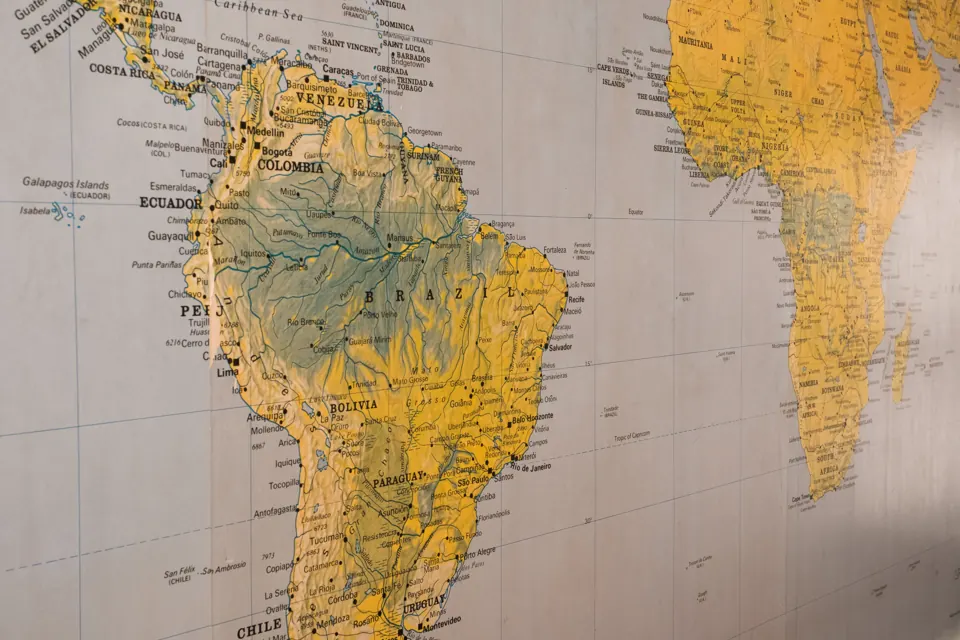
From bean to cup

Coffee grows around the equator

Origin: Arabica and Robusta

Coffee grows in the “bean belt” between the tropics – from Brazil and Colombia to Ethiopia, Vietnam and Indonesia. Arabica grows mostly in the highlands and tastes finer and brighter; Robusta is hardier, has about twice the caffeine and adds body and crema to espresso blends.

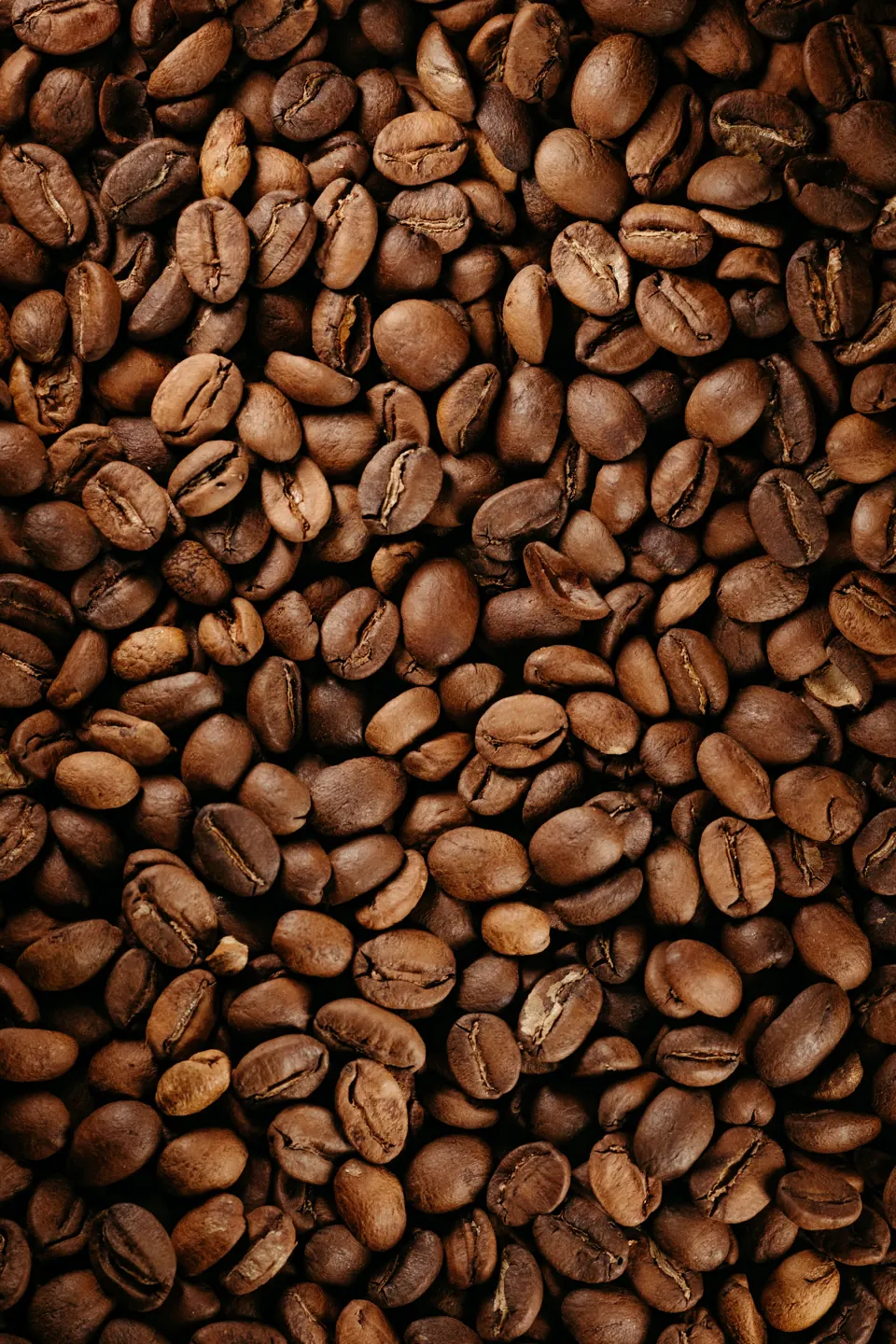
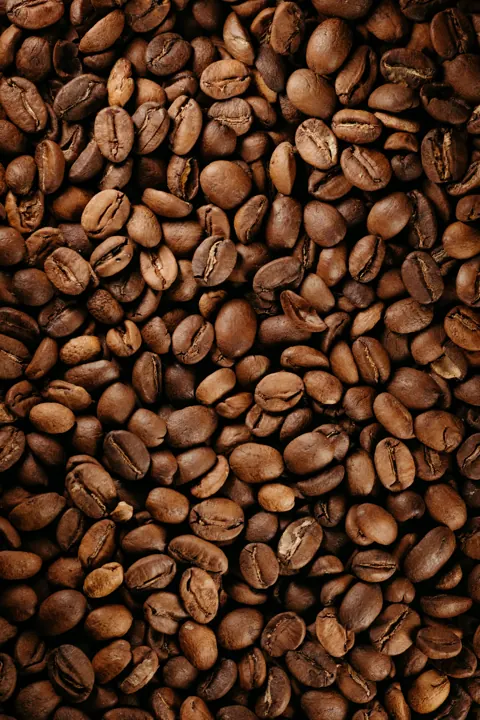
Roasted coffee beans

Roasting, organic and roasted in-house

Aroma is created in the roaster. Light roasts are fruity and suit filter coffee; dark roasts are chocolatey and classic for espresso. Some cafés roast their own beans and serve them very fresh; organic beans come from certified organic farming.

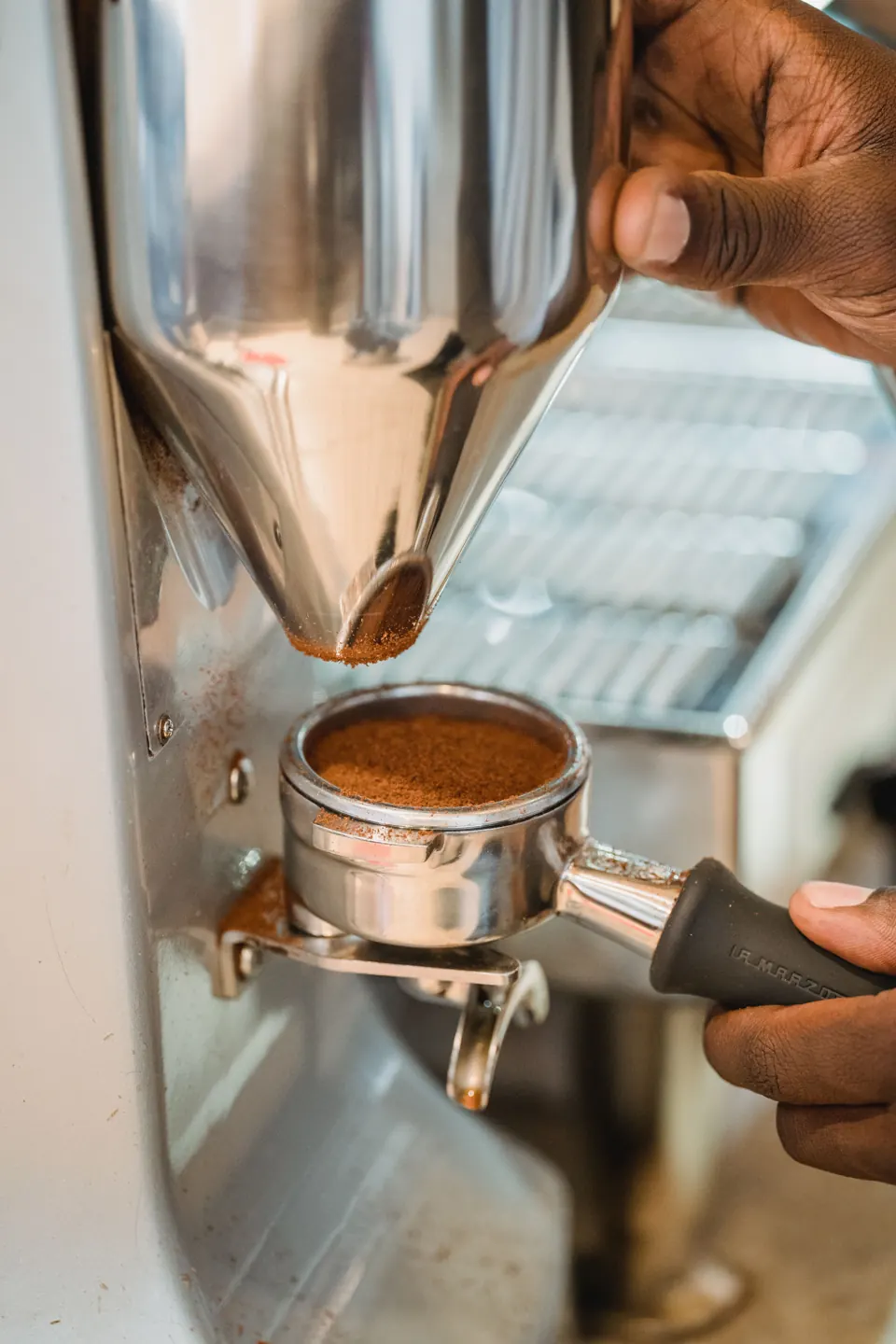
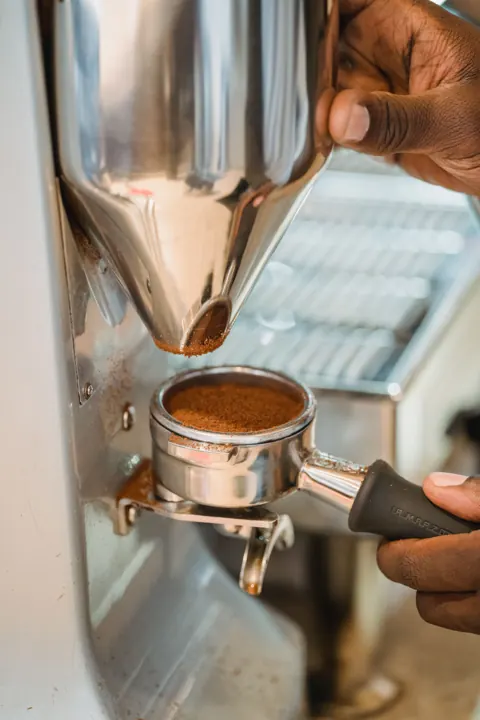
Freshly ground straight into the portafilter

Portafilter, lever, bean-to-cup

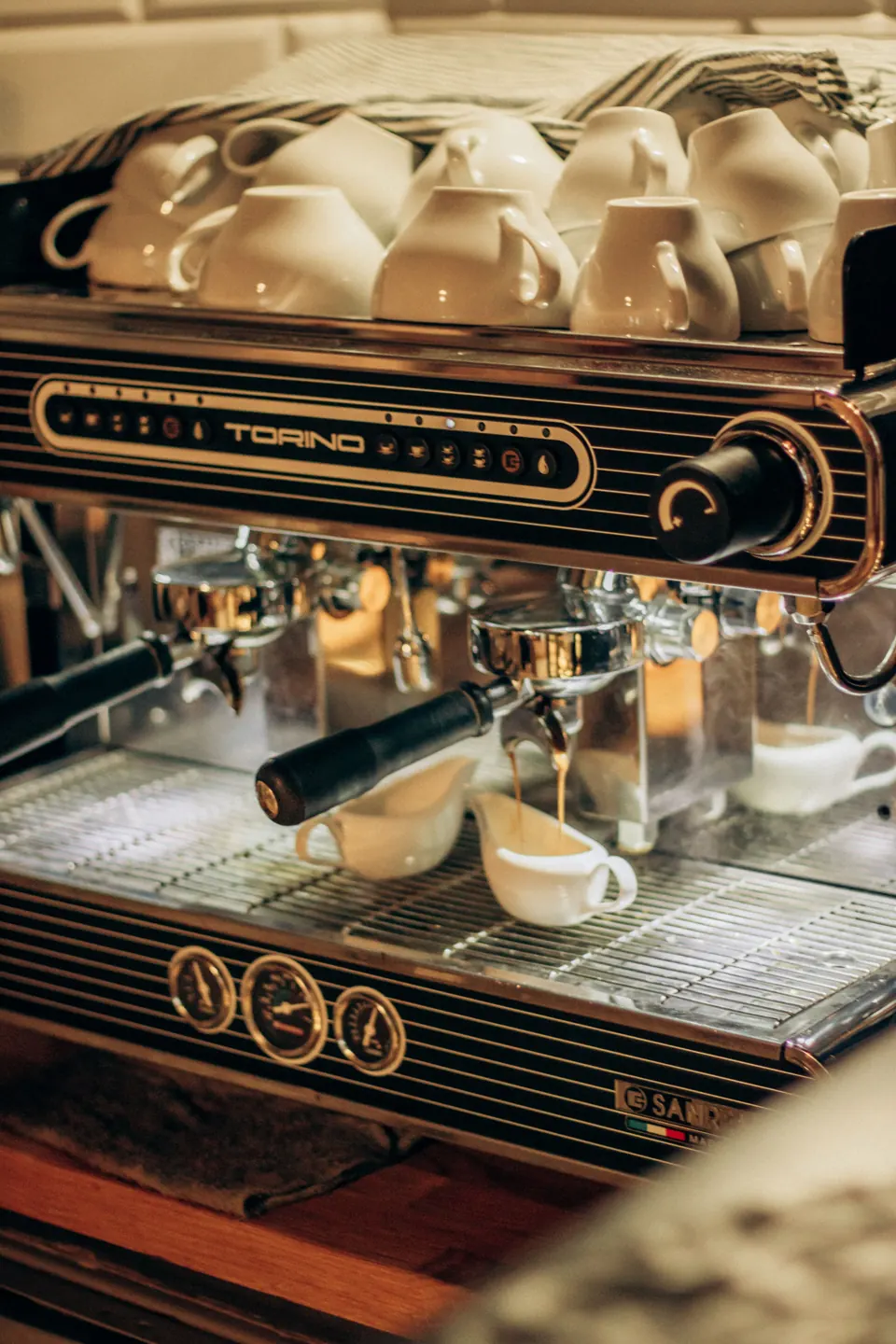
With a portafilter machine the barista grinds and tamps every shot by hand – giving the most control over the espresso. Lever machines build pressure with a spring or by hand. Bean-to-cup machines grind and brew at the push of a button, capsule machines use pre-portioned coffee.

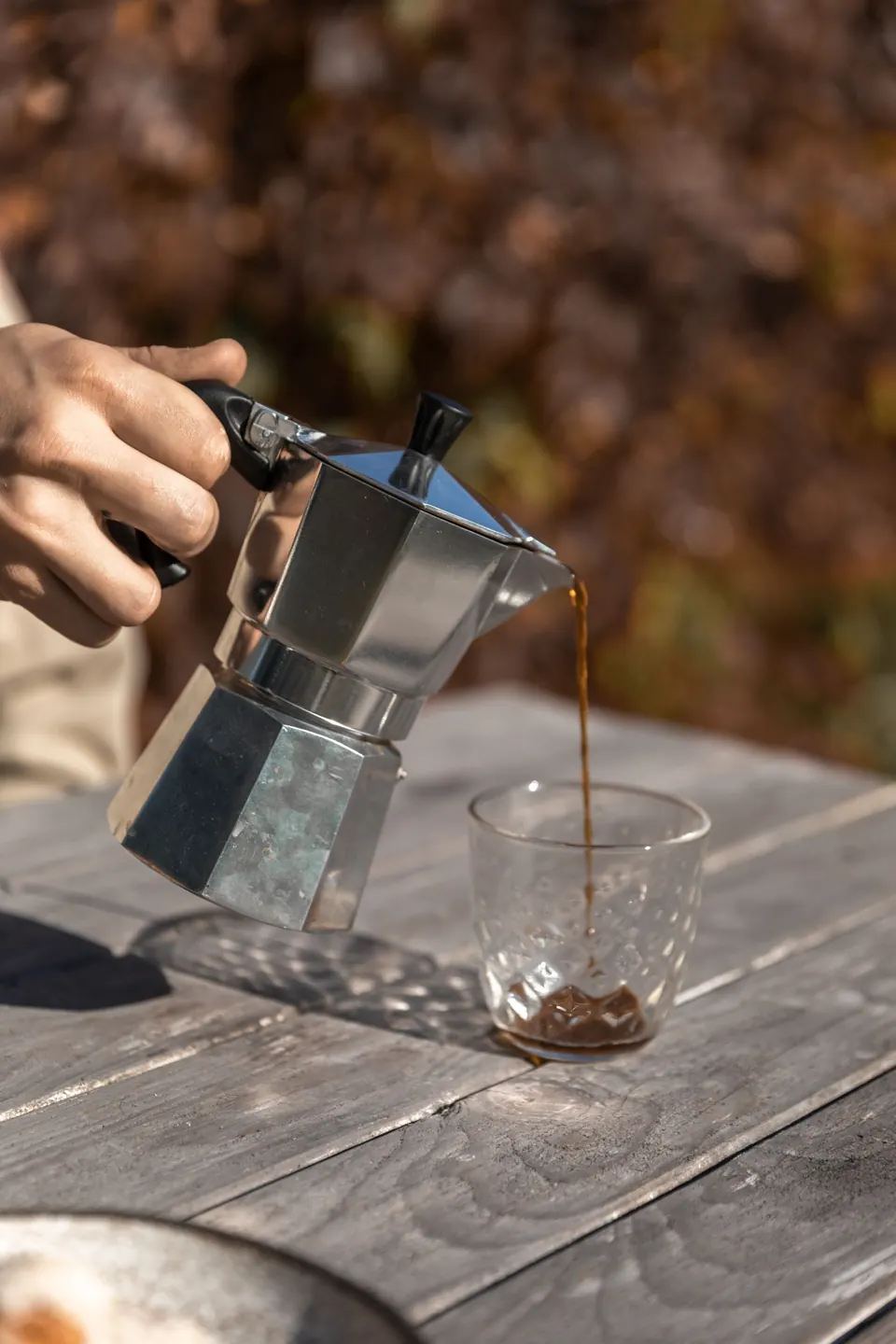
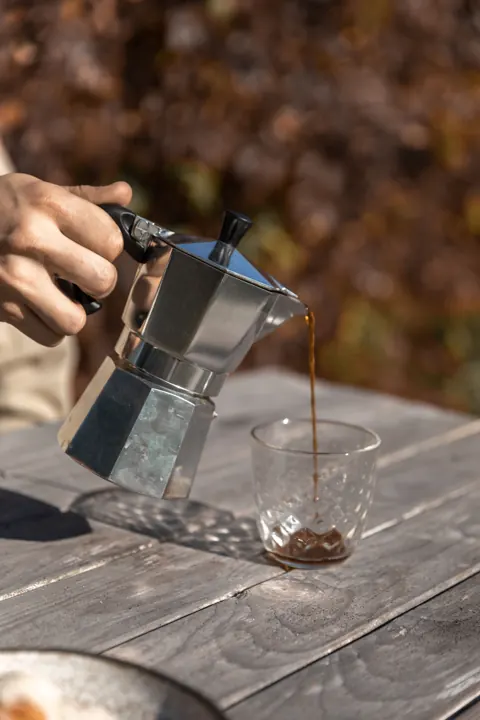
Coffee from a moka pot

Moka pot & more

The moka pot pushes water through the coffee with about 1–2 bar of steam pressure – strong, but not a true espresso. Add pour over, French press, AeroPress and cold brew: each method brings out different sides of the same bean.

Your favourite drink is missing?

Rate it in the app – with a photo and the price. Then it shows up here and on the map.

Download on the App Store Open the map →